
One URL model for every public page
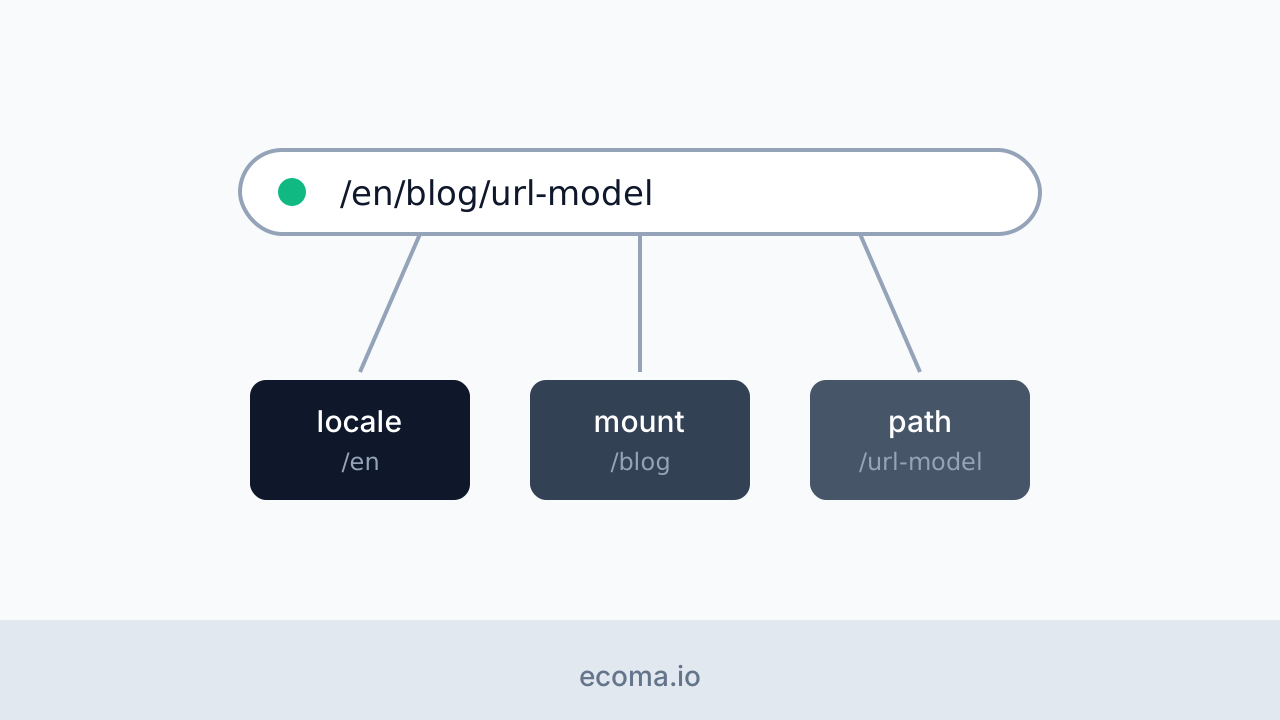
Every page on ecoma.io lives under one shape:
/<locale>/<mount>/<path>
That is not a convention we hope teams follow. It is parsed, rejected and built by two small libraries, so a page cannot silently drift into a shape the rest of the platform does not understand.
The three segments
- locale comes first, always:
/en/...or/vi/.... There is no unprefixed variant, so a URL never needs to guess its own language. - mount names the surface:
blog,docs. It matches on a full segment boundary -/en/bloggingis not the blog. - path is everything after the mount, and it belongs to the app that owns the mount.
Strictness is a feature
The parser does not repair input. A trailing slash, an empty segment, or an unknown locale is rejected with a typed reason:
/en        -> ok
/en/docs/  -> rejected: trailing slash
/EN/docs   -> rejected: unknown locale
/en//docs  -> rejected: empty segment
Repairs feel helpful and are quietly harmful: a URL that "works" in a non-canonical form gets indexed, cached and shared in exactly that form. Rejection keeps one canonical address per page.
Slugs survive translation
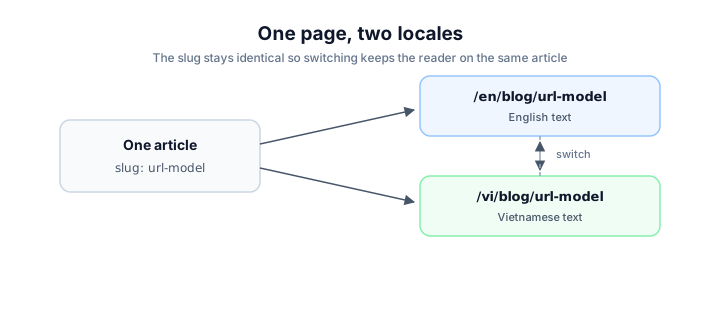
An article keeps the same slug in both languages. /en/blog/url-model and
/vi/blog/url-model are the same resource wearing two languages, so the locale
switcher can move a reader between them without a lookup table.
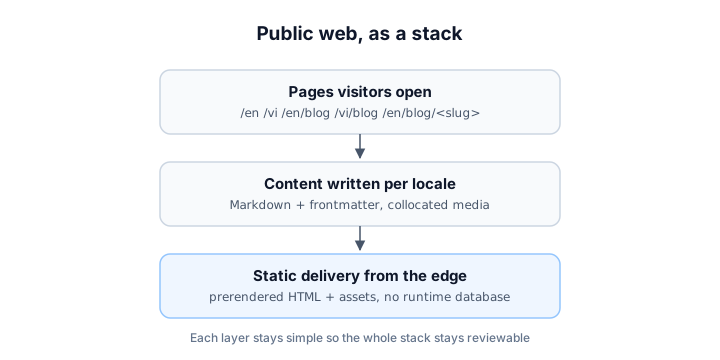
Related: the docs surface documents the same model in more depth - see Public web layers for how content reaches the page.