
Deploying a blog as static assets
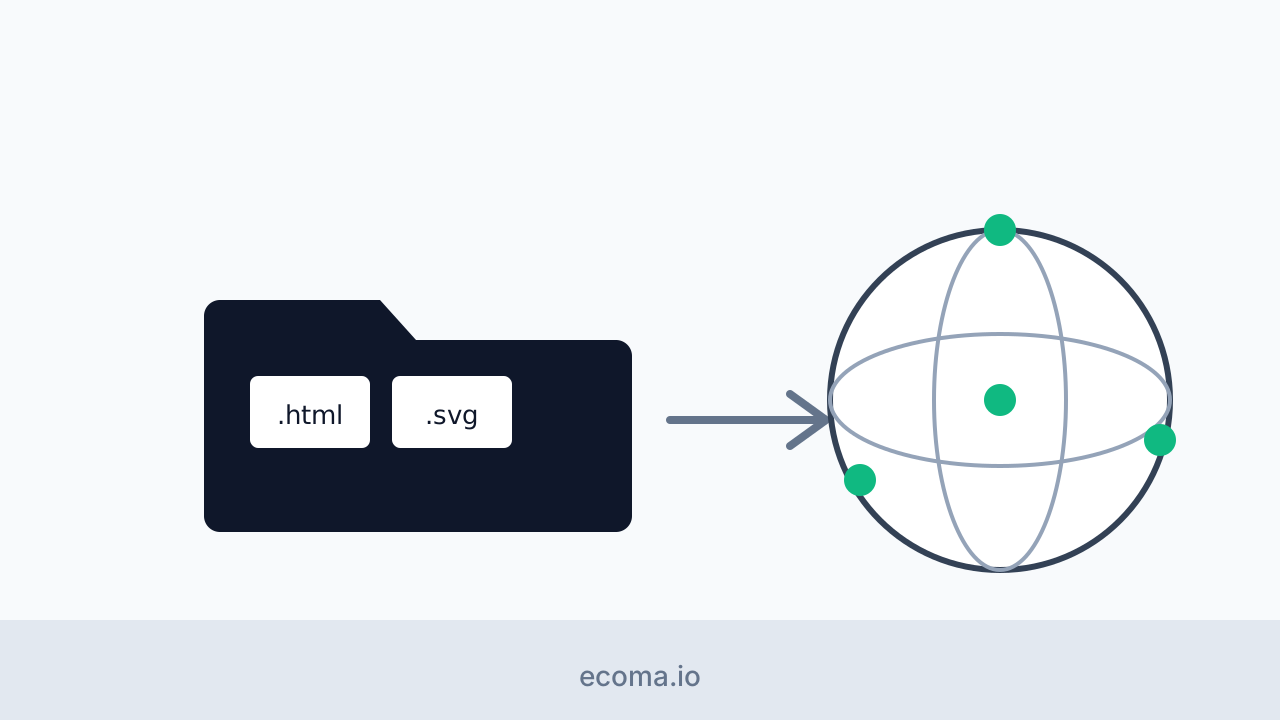
The deployment of this blog has no code in it. The Worker configuration declares a directory of files, a 404 page, and nothing else.
What the config says
{
  "assets": {
    "directory": ".output/public",
    "not_found_handling": "404-page",
    "html_handling": "drop-trailing-slash",
  },
}
Three decisions worth explaining:
- No
main- with no Worker script, nothing executes per request. The platform serves files directly, which is both the cheapest and the most reliable serving mode. 404-pagehandling - an unknown URL gets a real 404 status with a real error page. SPA-style fallbacks return 200 for everything, which quietly turns typos into indexable "pages".drop-trailing-slash- canonical URLs here have no trailing slash. The defaultauto-trailing-slashmode would redirect the canonical address to a non-canonical one, permanently.
The 404 is part of the product
A blog that answers every unknown slug with a soft 200 trains readers to
distrust its links. Serving a real 404 for /en/blog/not-an-article is the
deployment doing its job.
Identity without a script
The deployment still carries a Worker identity for the platform - previews and environment routing key off it - but the identity is not an executable. It is a name for a directory of files, which is exactly what this surface is.
Reading path first, deployment second: content resolved at build time explains why there is no runtime database to bind.